
Together with Accuracy of note playing, Tone is a vital foundation for Note Bending. Here are the principle steps to good tone:
• Deep diaphragmatic breathing
• An airtight seal / good embouchure
• Accurate single notes
• Open mouth cavity
• Open vocal tract
• Tongue in neutral
• Work from the diaphragm
• Accommodate the sound waves
• Listen for the sweet spot
• Try tongue blocking
• Add your hands
Breath control
This is neither table football, nor a MacDonald’s milkshake, so stop trying so hard, you might burst a blood vessel! We need to inhale and exhale gently. Simply provide a ‘column of air’ from deep in your diaphragm.
 Airtight seal
Playing off the harmonica, or addressing it politely will result in a peripheral hissing sound. You have a gas leak! For the benefit of society, you need to sort this out as quickly as possible. Don’t peck the harmonica, push it right into your lips and get intimate; your harp loves a kiss and a cuddle.
Adjust your embouchure so that no air escapes. Ensure all your breath passes through the instrument. This means pushing the harp between supportive, but not rigid, lips. If you are tense and your lips are too firm it ain’t gonna happen. Relax. We sometimes call the harp a blues burger or a tin sandwich. Don’t be afraid to chomp that thing. Get your lips right over the numbers so that you’re nudging the forefinger of the hand holding the harp.
Accurate single notes
When working on tone, you need to focus on playing clean individual notes, free from interference. Use your hearing muscle to identify clean sounds and busy sounds. Clean is good. Busy is not good; like a car horn, it’s says look out! Ease away from the note you don’t want, and just play the one you do want. Once you can do this on one hole, you’re ready to carry the process to the next one. A good place to start is with the Major Scale 4B 4D 5B 5D 6B 6D 7D 7B (B is blow, D is draw, and the number is the hole you should isolate). By learning simple tunes – nursery rhymes even – you will quickly coach yourself towards accuracy.

Often when we start learning harp, through lack of embouchure, we activate more than one hole at a time. It’s the Bob Dylan effect. You instantly limit the amount of tone you can produce because you’re spreading yourself too thinly. It’s a big old gas leak. So narrow things down and improve your chances. Don’t put up with
cheap imitations. Incidentally, in order to locate the note you want, don’t be afraid to use the tip of your tongue to count up from 1 or down from 10. It’s a legitimate process. Get sloppy! Your harp enjoys intimacy remember, but tap out afterwards to prevent unexpected surprises later.
Hot Potato (or Hard Boiled Egg)
This is the next important concept to take on board. You need an open mouth cavity and vocal tract. So imagine you have a hard boiled egg, or a hot new potato, in your mouth as you play. Resist the temptation of bringing your tongue into the equation. Pretend to yawn. That’s where your tongue should be. Otherwise try speaking like Mr Bean for a while.
Narrow tone – the letterbox effect
When you first latch onto a note, you’re tongue will most likely be front of house (near your teeth). It’s the same when you sip a hot drink. This gives you a narrow tone too. It’s a sound you’ll hear Sonny Terry, Kim Wilson and Sonny Boy Williamson II use from time to time. So there is a place for it; it’s kind of metallic and thin. But right now we want to find that big sound. We’re chasing the Harp Surgery’s best friend – Fat Tone; he’s our Pizza man. As opposed to Thin Tone who runs the organic salad bar.
Tongue in neutral
For the biggest tone, you don’t want your tongue too near the harmonica. Simply dropping your jaw, relaxing your tongue, and resting it off the harmonica will open up the mouth cavity enough for a significant change in the sound you make. Let your tongue fall away and start to pull (or push) from your vocal tract. On the lower draw notes, if your tongue is moving and generally in the mix, the note you need may sound flat. This is because you’re signalling to the reed that you want it to bend. Release the reed, back off and draw (or blow) softly from the diaphragm. Breath through the harp and remember the column of air principal.
Diaphragm, diaphragm, diaphragm
Blow notes: Push from your chest but support the airflow from your diaphragm. Once a clear note is achieved, let your tongue fall back. Open up the throat as if yawning and push a little more from the chest. You should notice greater depth in the resonance and warmth of the note. This is tone!
Draw notes: Once you start to draw and achieve a clean note, DO NOT manipulate it with your jaw, lips or the front end of your tongue. It’s going to bend the reed and we don’t want this yet. Instead, pull from your chest and diaphragm. Breath inward across the reed. Pull from your chest and diaphragm – but resist manipulating from the ‘front end’. Let air in through your nose initially if it helps balance the pressure on the reed and correct any bending – you will hear the pitch alter. Continue to pull from chest. Let your tongue loosen and fall comfortably as far back as possible.

If you find 2 Draw particularly uncooperative, learn how to fix this common problem here. Open up the throat as if yawning. Pull more from the chest. You should notice greater depth in the resonance and warmth of the note. This is tone! Still not there yet? Whistle a low note or pretend to yawn. This is where your jaw, tongue and throat need to be positioned for the best resonance and fullest tone.
Discover your inner cello
Like the sound box on cello, if you literally inhale in your draw notes and let them resonate in your mouth, open throat and chest, you are accommodating the sound waves in the same fashion, and enabling them to resonate. Your sound amplifies and has a warmth that fills the room. This is tone. Let the natural frequencies do their thing and avoid throttling the note by playing with too much force. It’s a balancing act at the end of the day, but learn to accommodate the notes your playing.
Use your ear muscles
When you’re searching for your best tone, close your eyes and really, really listen. When your body shape, air flow, and pressure on the reed are perfectly balanced, the sound frequency will resonate at its optimum level. It will sound warmer and amplify naturally as we’ve mentioned. This is the sweet spot and you’re right on the bullseye.
Give yourself a hand
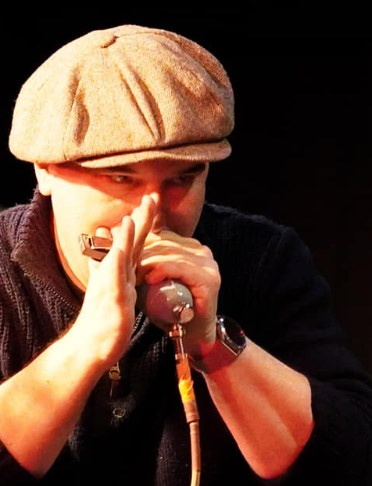
And finally, remember what Big Walter Horton said. My tone is in my hands. When you play acoustically, use cupped hands and adjust your grip to accommodate the sound frequencies. This will affect your tone too. Sonny Boy Williamson II often played in front of a vocal mic through cupped hands and sounded amazing. exper
Conclusion
If you can’t hear it yet, go back to the start and work through again. It’s worth it. Playing one note with the best possible tone beats loads of weak notes every time. Think cricket or baseball. Listen to the sound you’re making and find the meat of the bat. The sweet spot. You know when you’ve found it because it will ring in your ears and fill the room. You will hear a full, rounded and, above all, warm sound quality.
Post script
Don’t confuse tone with volume. Tone applies to any note, quiet or loud!