Why Are My Harp Notes Set Out This Way?
‘I do desire we may be better strangers.’ As You Like It (William Shakespeare).
Background
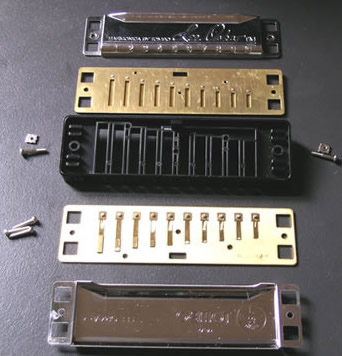 One of the first exercises we learn at the Harp Surgery is playing the major scale from blow 4 up to blow 7 (the mid octave). We use this to develop single note playing and movement around the harp. Simple as it may seem, it’s a great way of learning to navigate the new instrument and to develop an aural awareness of the changes that take place (as we cannot actually see them under our nose). We also use it to warm up at the start of subsequent sessions.
Once the central doh-ray-me is mastered, we then learn to extend upwards from hole 7 to hole 10 (the upper octave) and consider the 10 hole blow bends necessary to complete the sequence. Lastly we apply the process to holes 1 to 4 (the lower octave) and consider the draw bends necessary to complete the pattern. Once we can play the major scale in each octave fluently, including bends, we have the ability to range the length of the harp in 1st position, using it as one homogeneous instrument.
So why is hole 7 back to front?
Coming back to the central scale in holes 4 to 7, there is one thing that sticks out like a sore thumb. Hole 7 is backwards and trips us up every time. For those who are totally new, the mid scale on any 10 hole diatonic runs Read more

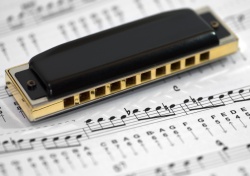 If I catch you bending, I’ll saw your legs right off..
 Flat Foot Sam bought an automobile
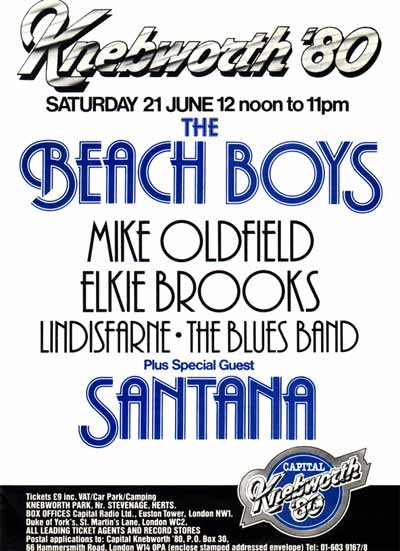
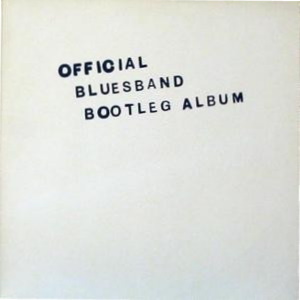 A year later, amidst great media interest, The Blues Band took the stage at the 1980 Knebworth Festival. The Good Doctor was in the crowd with the ‘naughty botty’ gang, ready for a musical feast which also featured Lindisfarne, Elkie Brooks, Santana and The Beach Boys. It was a fabulous day compered by Richard Digence and the bands were exceptional. After the festival, one song in particular stuck in the Doctor’s mental jukebox – Flatfoot Sam by The Blues Band. It was his favourite track on their Bootleg LP and just as good performed live.