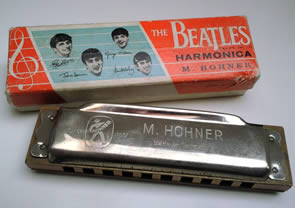
More Beatles Harmonica [..with tab]

Beatles harpTo the toppermost of the poppermost

Further to our harmonica study of Love Me Do, we should now take a further look at John Lennon’s harmonica recordings with the Beatles.

Not including the harmonica quartet on Sergeant Pepper’s For The Benefit Of Mr. Kite, we have identified at least a dozen Beatles tracks that feature harmonica. To be brutal, most of these are either ‘minor’ pieces from the band’s catalogue or else examples of Lennon’s harmonica work in its unaccomplished state. Rocky Racoon or Little Child for instance have particularly ‘unsophisticated’ harmonica parts. On I’ll Get You, the harmonica is badly out of tune.

What quickly becomes apparent is that John Lennon’s melodic use of the Chromatic harmonica was probably more comfortable than his diatonic work. With the Chromatic he could skilfully sidestep the need for reed bending on the short harp, which was not something he had yet mastered in the early 1960’s. We’ve chosen to help you nail three tunes where John Lennon’s harp lines feature most strongly.. Read more
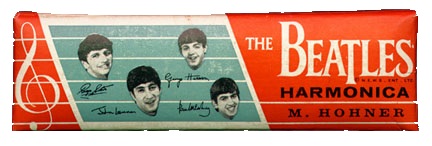
Love Me Do – The Beatles [..with tab]

Beatles HarmonicaI’ll always be true, so please, love me do

Much has been written about John Lennon’s harmonica playing with The Beatles. He started playing at a time in the 1960’s when American blues music was taking the UK by storm. Little Walter, Muddy Waters, Sonny Boy Williamson and Howlin Wolf all toured the UK. The Rolling Stones were stiff competition in the popularity stakes, with harmonica work by the multi-talented Brian Jones and many other UK R&B bands followed.

Bruce Channel was also touring the UK on the back of his ‘Hey Baby’ hit (many will be more familiar with the 1990’s cover version, famous for its loutish Ooh-Aah chant). With him was Delbert McClinton, the harmonica player on the hit. Legend has it that Delbert McClinton taught John Lennon cross harp while Channel’s band was touring Merseyside. In a later interview however McClinton busts this myth.

Read more

Our First-Ever Blues Harp Albums (Part 2)

As we review the albums that first got us hooked on blues harp, The Good Doctor tries to pick out his all-time favourite harmonica album from his days as a beginner.

The Good Doctor’s choice:
When she was a pre-schooler, I used to joke that my eldest daughter was the epitome of indecision. Presented with two options, she would innocently substitute ‘either or’ with ‘and’. Bargaining was fruitless. Consequently I developed my own circus act, flipping pancakes and toasting waffles simultaneously.

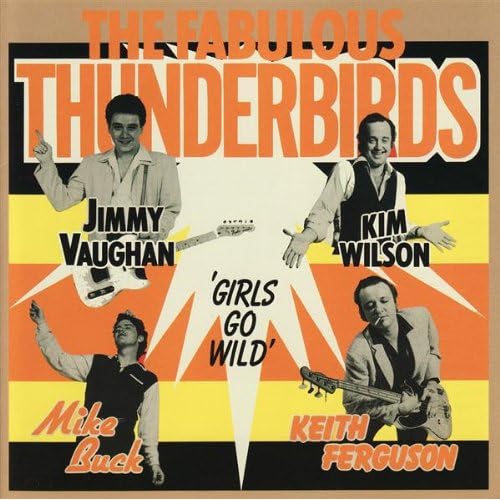
I have since learned that, given the opportunity of two best options, ‘either or’ is quite simply an unfair question. So I am taking a leaf from my daughter’s book and, free of compunction, I have to name two favourite albums. In the frying pan we have Girls Go Wild by The Fabulous Thunderbirds, while under the grill we have Live at The Marquee by 9 Below Zero. No amount of balloon debating will change my mind.

As a teenager, both these albums had me air-harping in front of the bedroom mirror. Nothing else mattered. Kim Wilson and Mark Feltham were my surrogate blues harp mentors. Real-life harp tutors did not exist in 1980 suburban England. There was Tony ‘Little Sun’ Glover’s now famous reference manual, but we had no Youtube or DVD. We had to engage our ears and our imagination, take a deep breath and figure it all out by ourselves. Which is another reason why these two albums rarely left the turntable. While they were a joy to listen to, I was also trying to copy and learn from them. Read more

Cupping Technique 101

In his latest article in the Harmonica Microphone series, Greg explains what happens when your cup overfloweth. The secret is getting a good seal.

The Harmonica Microphone Series beginsGood amplified tone starts with the player’s tone, and is accentuated by microphone technique. Cupping is an art; a learned skill that is neither obvious nor easy in practice. Properly done at its extreme, no air you suck or blow can escape “the seal” and therefore no sound at all comes out of the harp. Your goal is to visualize that all your breath must enter and exit through the microphone itself. In reality it is very hard to do this, and it is hard to even come close at first.
When the seal with a microphone is very good, the air pressure changes are effectively “coupled” to the microphone’s diaphragm in a way that is very, very different from the normal “free air” mode in which mics were designed to operate. The result is a very distorted signal sent to the amp. Read more

Our First-Ever Blues Harp Albums (Part 1)

Which record got you hooked on blues harmonica? This week the Harp Surgery team goes back to Original Spin…

Elwood’s choice:

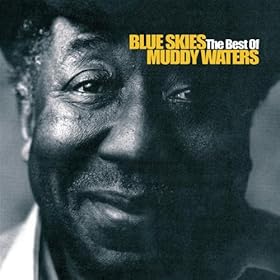
I’ll never forget the day I decided to take up blues harmonica. I was 18 years old, doing a crappy internship in a run-down part of the most boring town in England, and I decided to go shopping for music in my lunch hour. I can’t remember where I found the CD, but I do remember it just jumped right out of the shelf at me: Blue Skies, by some soulful-looking fellow named Muddy Waters.

The first track was ‘Mannish Boy’. I don’t recall the first listening per se, and yet I know exactly how it must have felt, because this bellowing, ball-tightening number still sends giant surges of electricity down the ole tendons. With Muddy on vocals, Willie Big Eyes Smith on drums, Bob Margolin on guitar and Johnny Winter on slide, the track’s signature riff has James Cotton on harp. I’d never heard of James Cotton, but that electric riff came shredding through my earphones like demonic buzz-saws being shot outta Satan’s crossbow.

I was hooked. Read more

Son of Dave – Part 2 : “I’m not really a very clever harp player”

Son of Dave interviewLast month we interviewed the Son of Dave. Here’s the second half of our chat with the beat-boxing harmonica man: this time, he rants about drum-machines, America, nun-raping pop songs, and why he wears sunglasses indoors.

…So I asked some of our readers if they had any questions for you. Here’s one from Adam Gussow.
SoD: He has a question for me?

Why, he has three questions.
SoD: Get the fuck out of here! Well, hi Adam.

Here’s his first question: do you tongue-block or lip-purse, and does that sort of technical question interest you or bore you?
SoD: Tongue block, now stop boring me. Read more

Sign up for news and exclusive offers