Wanderin' Wilf's Harp Surgery

"Grab your harps, make yourself comfortable and let the good doctor fill you in. This won't hurt. Harp Surgery is all about kicking down doors and making hard-earned knowledge available to all. It's also about encouragement. The good doctor says, 'I can do it - so can you. Here's how..!' I hope you enjoy exploring and learning from the information on offer. Bend it like Beckham? Bollocks to that. Let's show 'em how it's really done!"

Need some lessons from Wilf? Click here

Top End Harp Playing

Posted by Wilf

“Apart from the known and the unknown, what else is there?” Harold Pinter

What is the ‘Top End’?

Holes 7-10 and everything that goes with them. When I first took up the harp, it seemed players always asked each other two questions: ‘Do you tongue block?’ and ‘Do you use the top end?’ At that time I didn’t do either. I didn’t really know what they were.

Apart from one high-pitched lick I had gleaned from The Cheaters song ‘Drugs’ (on their excellent ‘Sweat It Out’ album), I think I cracked blow bends long before I ever explored what has lovingly become known as ‘banjo country’. The top end. I go there more often these days (I also tongue block).

Why might harp players avoid it?

As human beings we love our comfort zones. Holes 1-6 are full of wonderful draw bends, classic licks and patterns that can readily be adopted. The lower notes are blown. The higher notes are drawn. The general pitch level is also comfortable on the ear. Play through draws 2, 3, 4 and blows 5, 6, and you have what the good doctor calls ‘the backbone of the blues.’

From hole 7 upwards, the draw notes are lower than the blow notes. Everything suddenly feels upside down or back to front. The reeds are tighter, they behave differently and they have a shriller, less comfortable, pitch. We may as well be playing two different instruments.

Is there a reason behind the reed layout?

Yes indeedy! The upper blow reeds are arranged in arpeggio across three octaves. If you blow from 1 to 10 you will find a repeated pattern. The lower draw reeds do not follow a symmetrical pattern, however the result is a diatonic, or prescribed, arrangement of notes around the upper mid holes which enables easy melody playing in the key of the harp. That’s why we often learn tunes like ‘When the Saints’ and ’Camptown Races’ as beginners. No bends necessary; this is straight harp. It’s what the instrument was designed for.

By changing to cross harp, or second position, we depart from this prescribed format. Consequently one or two notes are missing - until we can find them by bending reeds - and we have to adapt our playing to the changed note patterns. This process continues into third and fourth position playing, until it actually becomes more convenient to pick up a harp in the new key.

Why go there?

Because there is so much to enjoy and, if you spend time exploring the top end, you’ll become a much more versatile player. Get used to passing across the 6-7 border without flinching! In time you will be impressing the crowd with your fast top end runs and fabulous blow bends. Ignore the top end and, while you’re playing it safe, you’re also losing a third of your instrument. So live dangerously!

How do I get started?

Tell yourself you are going to connect the harp across all holes.

Start by learning to play the major scale in straight harp across all three octaves from blow 1 to blow 10. The mid octave from blow 4 to 7 is easiest as there are no bends. The upper octave from 7 to 10 is next easiest. Just one blow bend needed in hole 10 to play the penultimate note of the scale. Lastly tackle the lower octave - and enjoy the challenge of draw bends (Blow 1, draw 1, blow 2, draw bend , draw 2, draw bend 3, draw 3 and blow 4).

Next learn the blues scale in cross harp (2nd position) from draw 2 to blow 6. The main riff in Junior Wells’ ‘Messing With The Kid’ will help you find the notes. Extend it up to blow 10. Lastly loop down to blow 1 and complete the blues scale through a couple of draw bends back to draw 2.

3rd position, playing from draw 4 up, and down through draw bends to draw 1, will give you a jazzy feel with minor scale notes. Try playing ‘Scarborough Fair’, ‘Hawaii 5-O’ or ‘Drunken Sailor’ from draw 4 and you’ll soon work out where things are.

1st position blues involves a blues scale through bends from blow 4 down to blow 1, then a jump up to the blow bends across holes 7 -10. There are lots of examples of 1st position blues playing - check out Paul Lamb’s ‘Every Day I Have The Blues’ or Jerry Portnoy’s ‘Home Run Hitter’. Many of Jimmy Reed’s songs are in 1st position too.

All these activities will help you to break into the top end in different ways. Enjoy the challenge and contact me if you need any help.

And finally..

For an amazing tune that uses top end notes, try to find Doc Watson’s ‘Mama Blues’ (listen to a snippet of it here). It’ll blow you away. Rory McLeod is also worth checking out - try his Footsteps and Heartbeats album.

Hats off to Charlie McCoy on ’Orange Blossom Special’. And of course those 3rd position giants - Sugar Blue and John Popper (of Blues Traveler). They’ll leave you gobsmacked, although they may become a bit repetitive after a while. Remember there is software available these days that allows you to slow tracks down without changing the pitch. If they can do it, it can be done… What’s stopping you?

Steve Weston’s Customised Harps

Posted by Wilf

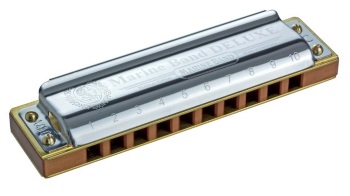
Fed up with purchasing harps from retailers in the US to take advantage of the pound/dollar exchange rate, only to get them home and find they are as useless as the Pope’s knackers? I was! See my San Francisco experience - recently repeated in New York. So I decided to swing the other way and splash out on a couple of Steve Weston’s customised classic Marine Bands.

Steve strips the harp down, seals the pear wood comb so it’s more moisture resistant, then he drills and screw it back together so you can replace the reed plates if you need to later. Finally he checks the tuning and services the harp. And there you have it. All for a modest £35 plus postage.

Unlike the US experience, any problems and you ship it right back for Steve to review. My first two harps were slightly out on the the 1-4 hole draw octave, possibly as a result of my breathing technique. I rang Steve and demonstrated over the phone. He was totally supportive. No questions asked - if I sent them straight back, he had my contact details and would correct them straight away. Which is exactly what he did. The harps that is, not my contact details.

Now that’s what I call good service and value for money. You can check West Weston’s harp page by clicking right here. You can visit West Weston’s main music page by clicking here.

Magic Dick - Whammer Jammer

Posted by Wilf

Background

Here’s a top 10 entry in our ‘I wanna play like that’ harp track list. Originally recorded on the second J. Geils Band album ‘The Morning After’ in 1971, and again on their classic live album ‘Full House’ the following year, this is a turbo-charged monster of a harp instrumental.

For my own part, I picked up 9 Below Zero’s track, ‘Swing Job’ from their classic live album ‘Live at The Marquee’ recorded in 1980, and started playing it live to much local acclaim… Until an Ozzy friend wagged his finger and pointed out that Swing Job was a Whammer Jammer derivative. He played me the track and my jaw dropped. I never knew the ‘Centrefold’ band of my youth played R&B. And I was oblivious to the fact their line up included a demon harp player with a crazy name who played with the power of a piledriver.

Even less was I aware of the huge influence The J.Geils Band had on my favourite UK outfit, 9 Below Zero. When you consider their Live at The Marquee album includes ‘Homework’ and ‘Pack Fair and Square’, as well as gallons of high octane delivery, of course it is totally apparent.

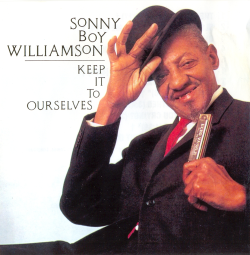
Magic Dick freely admits his own influence for Whammer Jammer is Sonny Boy Williamson II’s ‘Bye Bye Bird.’ I would be interested to know if the thread goes back any further.

Sonny Boy plays ‘Bird’ on a C harp with an extended lower octave. It’s essentially a train song about leaving home and the basic rhythm matches Whammer Jammer. Sonny Boy starts off on a double-hit intro with hand vibrato; Magic Dick also uses a double-hit intro. However he goes for a feathered 2-5 hole octave draw followed by a leap to piercing blow bends on holes 9 and 10. The chugging that follows is common to both songs too, however Sonny Boy uses push-pulls across holes 1 to 3, while Magic Dick opts for a tongue blocked 3 hole blow. Beyond this the numbers diverge and Magic Dick develops his own stuff, no doubt drawing on other influences.

How to play it

A few years ago I found a harmonica tab of Whammer Jammer, which somebody had very bravely put together using arrows and numbers…. Ultimately there are so many effects involved that it’s almost impossible to tab beyond the essential notes. Technique is everything on this one.

To crack it you will need big lungs, the ability to switch between puckering and tongue blocking, and well honed chops to avoid lip freeze on the blow bends. You’ll also need to master feathering, hand cupping, triple tonguing, tongue-blocked trills and whooping.

We can break Whammer Jammer down into the double-hit intro, rhythmic solo section and six twelve bar sequences.

Conclusion

In the words of Magic Dick - ’Every little thing you do makes a difference.’

Check out the J. Geils Band, Nine Below Zero and Sonny Boy II in our music store.

James Wheeler’s Blues Jam - Rosa’s Lounge, Chicago 19th June 2008

Posted by Wilf

Chicago - Rosa’s Lounge

If you’ve never tried it, go! Don’t expect anything grand like Buddy Guy’s Legends, this is more like going down to your local. Perfect in my opinion. Get some rest beforehand and plan to arrive between 9.30 and 10.00 pm local time (yes that’s six hours behind the UK….!). If you are a musician, take your instrument and sign up at the door. You’ll get in for free and Tony will call you up once the house band has finished its intro set (around 40 minutes). And don’t be nervous - this is a really cosy, cosmopolitan, genuinely friendly establishment. Everyone will speak to you and Tony will make you feel very welcome. The jam carries on till 2am officially, but with jet-lag and time difference I was totally knackered by around 12.30am…I guess others were too as the crowd started to thin.

The house band comprised James Wheeler in stetson and waistcoat on the lead guitar, Sumito ‘Ariyo‘ Ariyoshi on piano, Tony Mangiullo on drums, Vic Jackson on Bass, guest Matthias (from Ecuador) on harps and a great second guitarist from Israel (whose name I have sadly forgotten - and that’s after a long chat outside when he told me about his time in London, visiting Ain’t Nothin’ But and seeing band like Pete G and the Magnitones).

The house band struck up just after 10pm in true Chicago style; crisp and pumping. After a warm-up shuffle, they ran through Early In The Morning, Key To The Highway, Mojo Working and I’m Trying - the first three of which had a lovely twist to the rhythm. Until the lyrics kicked in, you might not have guessed what was coming. Levels were great on the ear; clear and not too loud.

After a ten minute pause, Tony invited me up with two Japanese girls on lead guitar and drums, a Pole on second guitar, and a local young Chicagoan on piano. Vic Jackson, also from Chicago, remained on bass. We played around three numbers, with the piano taking the vocals and musical directorship. I know the last number was Long Grey Mare in A minor, but I can’t remember the others, apart from the fact they were in A minor and C major. For the harps this meant 3rd position on a G harp and a Low F. Not the best keys for showboating but the chance to pop a few blow bends!

And so it is, with great delight, that I can say ‘been there, jammed that.’

Soloing

Posted by Wilf

So you joined a band and it’s your first rehearsal or maybe your first live show. At some point the rest of the guys look at you and nod: time for your first solo. What should you do? Don’t panic, Mr Mainwaring, you have plenty of options.

Do what comes naturally

Just pick a harp in the right key and go for it. Sometimes it’s the best option! Trust in your natural musical abilities.

Follow the melody

Pick up the melody line during the song, repeat and build on it during your solo break.

Follow the rhythm

Pick up the rhythm during the song and vamp over your solo break.

Follow the chord changes

Perhaps the most satisfying for you and the audience. Avoid retreating into trills and effects. Get musical. Play off draw 2 over the 1 chord. Use some blow notes over the 4 chord (try blow 2 or 4 and work off them). Find the patterns around draw 1 or 4 when playing over the 5 chord and the turnaround at the end of each bar sequence. Use light and shade - start quietly and build tension - especially in a slow blues. Work melodies, blues notes, moods, patterns, stops, licks and effects; but pay attention to the chord changes. The result is an accomplished musical contribution.

Keep it simple and use the space: less IS more

You don’t need to be the fastest, the loudest or the flashest. This is not a muscle-man competition, it’s an art. You have to contribute to what’s on the canvass, as part of a collective. The song, its message and its mood are the most important things. Get too busy and you ruin the effect. Leave space in what you play; weave around the existing mood, theme and chord structure. Build in your own feeling and passion… and take your time!

A word from Jerry Portnoy: Read more…